The Vernon Mine
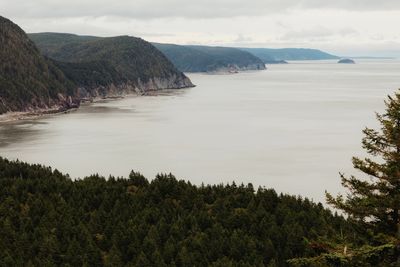
Overview
The Vernon Mine, located in southeastern New Brunswick, produced copper in the 1860s, with ore from the Peacock Vein shipped to Cardiff, Wales. Although historical assays reported gold grades as high as 4.8 oz/ton Au (N.B. 1864), no gold was ever extracted.
Location
The property lies along the Bay of Fundy, just west of Fundy National Park, about 50 km southeast of Sussex. It is accessible via gravel roads.
Key Findings
Peacock Vein Extension: A 900m potential extension of the Peacock Vein toward Rose Brook, where grab samples returned up to 9080 ppm Cu and 1274 ppb Au from a 1m-thick silicified zone over 10m strike length. A 300m-long soil anomaly (188 ppm Cu) remains open in both directions. • High-Grade Samples: Up to 3808 ppb Au, 1 oz/ton Ag, and 3–4% Cu behind the mine; soils returned up to 2008 ppb Au.
Geology
Mineralization is hosted within strongly altered zones (silicification, carbonatization, sericitization) adjacent to a southeast-directed thrust fault separating the Broad River Group from older volcanic and sedimentary units. Key features, sulphides, vuggy quartz textures, and structural intersections support a structurally controlled gold system with strong potential along strike and at depth.
Next Steps
- VLF Surveys to identify fault-related conductors and vein systems.
- Soil Sampling (B-horizon) to extend known anomalies and define new trends.
- Mapping and Prospecting in areas of strong alteration or geophysical response.
- Target Ranking by integrating geophysical, geochemical, and structural data.
- Drill Planning focused on the Peacock Vein extension and newly defined targets.